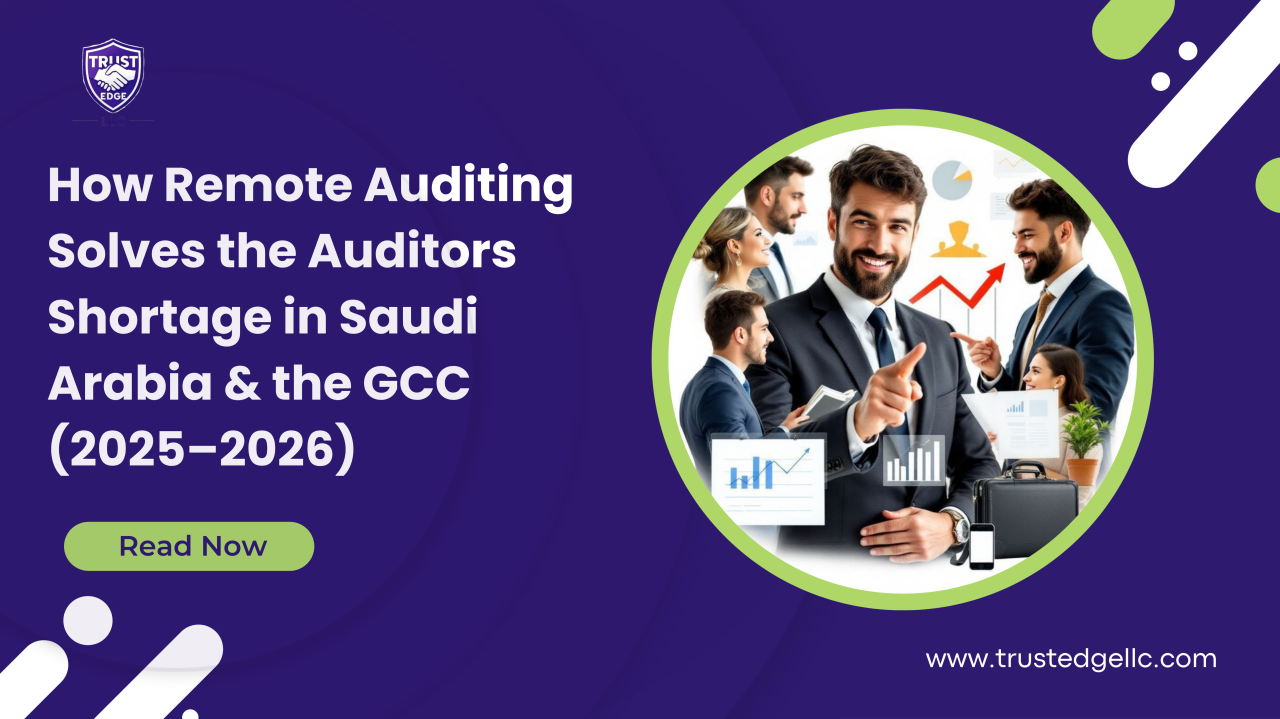
How Remote Auditing Solves The Auditors Shortage In Saudi Arabia & the GCC (2025–2026)
Insights every audit leader in the region needs to know
Audit firms across Saudi Arabia and the GCC entered 2026 carrying the weight of 2025’s biggest challenge: more engagements, stricter SOCPA & ZATCA requirements, and fewer qualified auditors.
But beyond the pressure, 2025 revealed something more important: a clear shift in how audit firms need to operate to stay competitive.
Remote auditing isn’t just a workaround it’s becoming an operational model that solves structural gaps in the industry.
Below are the four most valuable lessons firms can take into 2026.
1. Capacity Problems Are Structural Not Seasonal
One of the biggest mistakes firms made in 2025 was assuming the talent shortage was temporary.
But data from the region shows:
- Fewer graduates entering audit
- Higher turnover among mid-level auditors
- Bigger demand driven by digital transformation and new tax frameworks
This means the question for 2026 isn’t:
“How do we hire faster?” but : “How do we build a scalable team even when hiring isn’t an option?”
Remote auditing became the most reliable solution because it: • Increases audit output immediately • Maintains quality through experienced external reviewers • Gives firms flexibility during peak season without long-term commitments
2. Compliance Complexity Requires Deeper Technical Expertise
2025 showed firms that compliance is no longer about “keeping up” it’s about staying ahead.
SOCPA updates, ZATCA rules, and sector-specific requirements created:
• Higher review pressure • More technical errors • Longer engagement cycles
Firms that handled this well were the ones using external SOCPA-trained remote teams to support:
• Technical reviews • Working-paper preparation • Testing procedures • Documentation alignment
This shifted the internal team’s role from “executors” to “reviewers” improving accuracy and efficiency.
3. Reducing Internal Pressure Improves Audit Quality
2025 highlighted a crucial operational insight:
Burnout = Errors. Errors = Lost clients.
Firms that relied solely on internal teams faced:
- Delayed deliverables
- Higher rework rates
- Lower client satisfaction
Remote audit support helped firms:
• Protect their staff • Deliver faster • Improve reviewer focus • Reduce last-minute work
This wasn’t just convenient. It directly improved audit quality, which is becoming a competitive differentiator in Saudi Arabia.
4. Control Must Never Be Sacrificed
One of the biggest misconceptions about remote auditing is that firms lose control.
2025 proved the opposite.
With the right model:
- All remote work stays under the firm’s full supervision
- No direct contact with authorities
- Methodologies remain unchanged
- Confidentiality is protected
This turned remote auditing into a controlled extension of the firm, not an outsourced black box.
What Audit Firms Should Take Into 2026
The firms that will thrive in 2026 are the ones that adopt hybrid models combining:
• Internal expertise • Remote audit capacity • Strong compliance frameworks • Technology-aided workflows
This approach isn’t about cutting costs. It’s about building resilient audit operations that can withstand industry pressure.
Where TrustEdgeLLC Fits Into This
TrustEdgeLLC supports Saudi & GCC firms with supervised remote audit teams trained in:
• SOCPA standards • ZATCA requirements • GCC audit workflows
We help firms increase capacity while maintaining the same level of control, confidentiality, and methodology with no direct contact with authorities.