Risk Management and External Audits: What Every Business Should Understand
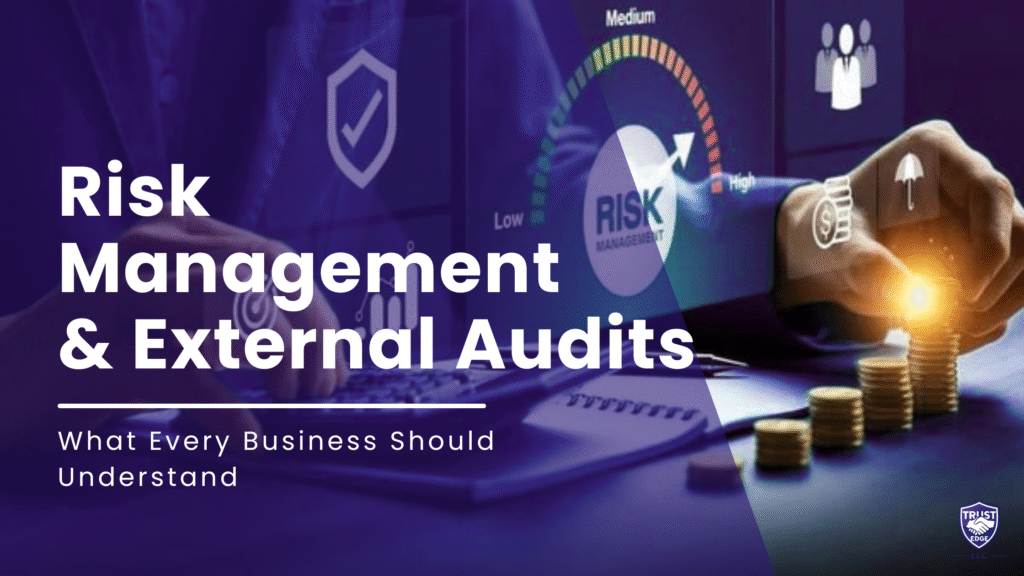
Risk Management and External Audits: What Every Business Should Understand
In today’s fast-changing and highly regulated business environment, organizations are constantly exposed to financial, operational, regulatory, and technological risks. These risks can significantly affect business performance, stability, and long-term growth.
This is why risk management and external audits are considered two essential pillars of effective corporate governance and financial integrity. They work together to protect organizations, improve transparency, and strengthen stakeholder confidence.
What Is Risk Management?
Risk management is the process of identifying, assessing, and mitigating risks that could negatively impact an organization’s objectives.
It is a continuous and structured approach that helps businesses stay prepared for uncertainty instead of reacting to problems after they occur.
Key Components of Risk Management:
- Risk Identification: Recognizing potential risks such as market changes, cyber threats, or operational failures.
- Risk Assessment: Evaluating the likelihood and impact of each risk.
- Risk Mitigation: Developing strategies to reduce or control risks (such as improving security or diversifying operations).
- Monitoring and Review: Continuously tracking risks and updating strategies when needed.
Risk management is not only about avoiding losses ,it also helps organizations make better strategic decisions.
Types of Risks Businesses Face
Financial Risks
Include cash flow issues, credit exposure, and market volatility.
Operational Risks
Arise from internal processes, system failures, human errors, or supply chain disruptions.
Regulatory Risks
Related to compliance with laws, regulations, and industry standards.
Strategic Risks
Linked to business decisions, competition, and market changes.
Cybersecurity Risks
Include data breaches, hacking attempts, and digital system vulnerabilities.
What Is an External Audit?
An external audit is an independent examination of a company’s financial statements and internal controls performed by qualified auditors.
The main purpose is to ensure that financial reports are accurate, reliable, and compliant with accounting standards and regulations.
External audits provide an objective opinion that helps stakeholders—including investors, lenders, and regulators ,trust the financial information presented by a business.
Objectives of External Audits
External audits aim to:
- Verify the accuracy of financial records
- Evaluate the effectiveness of internal controls
- Ensure compliance with regulations and standards
- Provide reliable financial information to stakeholders
They play a critical role in promoting transparency and accountability within organizations.
Real-World Example: Why Audits Matter
Corporate failures such as major financial scandals have shown the importance of strong auditing systems. When internal controls fail or are not properly reviewed, financial misstatements and fraud can go undetected.
These cases led to global regulatory reforms that emphasized auditor independence, stronger compliance systems, and stricter financial reporting standards.
The Relationship Between Risk Management and External Audits
Risk management and external audits are closely connected and complement each other.
- Risk management focuses on identifying and reducing risks proactively.
- External audits independently evaluate whether financial systems and controls are working effectively.
When combined, they help organizations:
- Strengthen internal controls
- Improve financial accuracy and transparency
- Detect overlooked risks
- Enhance compliance with regulations
- Increase stakeholder confidence
- Improve overall governance quality
External audits often validate the effectiveness of risk management systems and highlight areas that need improvement.
Why This Matters for Businesses
Organizations that integrate strong risk management with regular external audits are better positioned to:
- Respond to unexpected challenges
- Maintain financial stability
- Improve operational efficiency
- Build long-term trust with stakeholders
- Ensure compliance in complex regulatory environments
In modern business, uncertainty is unavoidable—but unmanaged risk is not.
Conclusion
Risk management and external audits are essential tools for ensuring business stability, transparency, and compliance. Together, they create a strong governance framework that helps organizations operate with confidence in uncertain environments.
By understanding and applying both effectively, businesses can reduce vulnerabilities, improve decision-making, and achieve sustainable growth.
TrustEdgeLLC
Your trusted partner in Risk Management, Compliance, and External Audit Support Services.