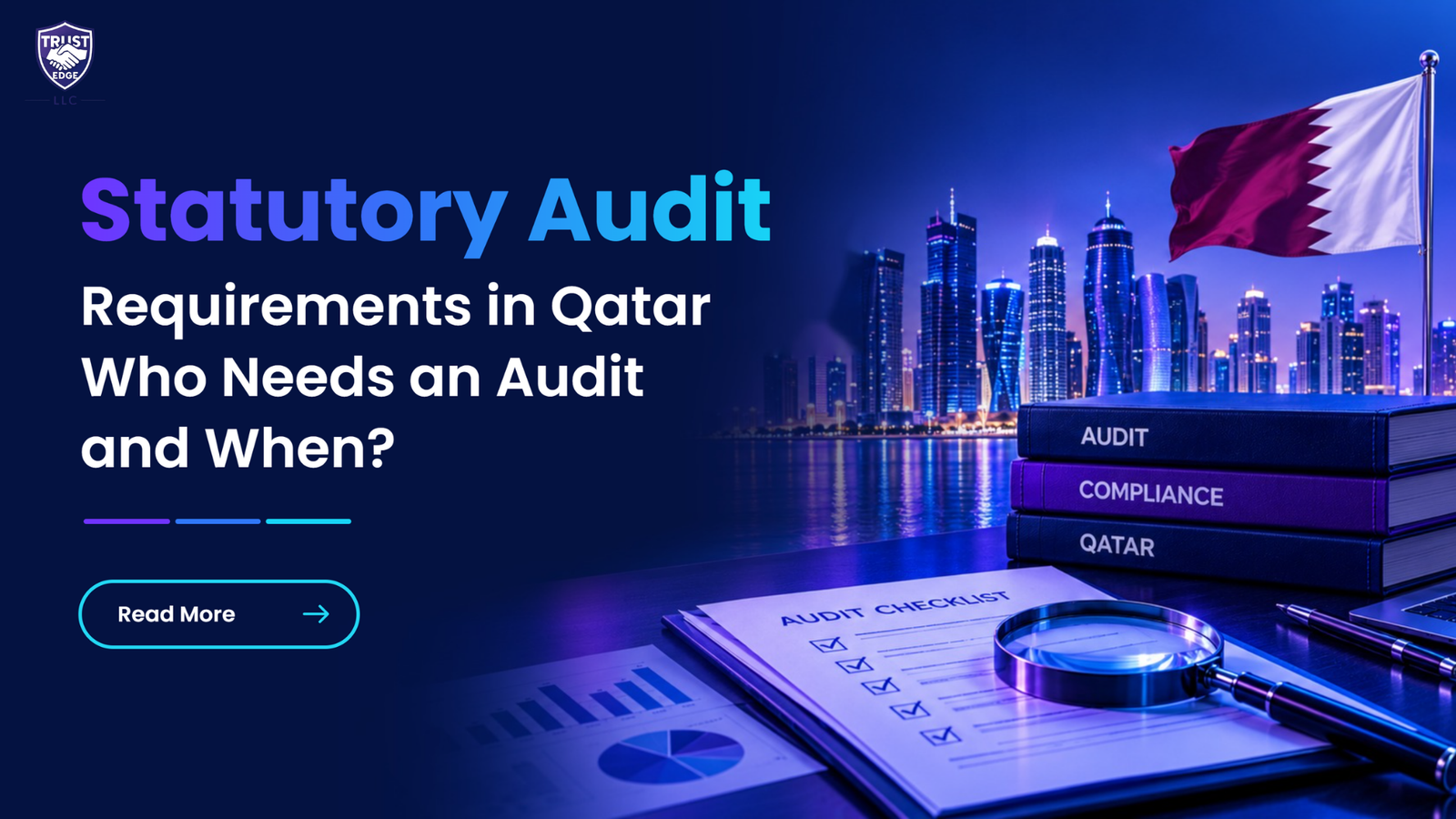
Statutory Audit Requirements in Qatar: Who Needs an Audit and When
Every year in Qatar, audit firms run the same race against the same clock. Every client’s audit has to be signed before that client’s tax filing deadline, and most of those deadlines fall in the same few weeks.
Getting through that season starts with knowing exactly which clients need a statutory audit, and by when. This guide answers both by walking through the statutory audit requirements in Qatar, using official sources only, then shows how firms can get ahead of the rush.
What a statutory audit is, and what it is not
A statutory audit is an independent check of a company’s annual financial statements, carried out because the law requires it. The auditor is an outside, licensed professional who gives an opinion on whether the statements are fairly presented.
Clients often mix it up with two other checks:
- An internal audit is done by or for management to improve controls. It cannot replace a statutory audit.
- A tax inspection is carried out by the tax authority itself. The statutory audit comes first; it produces the audited statements the tax authority later relies on.
So for each client, the first question is whether the law requires one.
Who needs a statutory audit in Qatar
For most clients, the clearest answer comes from the tax rules. The General Tax Authority (GTA) links the duty to who owns the company (GTA):
| Company ownership | Audited financial statements required? |
| Qatari and foreign partners, fully foreign-owned, or located outside Qatar | Yes, with the tax return, whatever the capital or income |
| Wholly owned by Qatari or GCC nationals | Yes, if capital is QAR 1 million or more, or annual income is QAR 5 million or more |
In both cases, the statements must be audited by a licensed auditor registered with the GTA (same source).
Two other frameworks sit alongside the tax rules. Shareholding companies must appoint auditors under the Commercial Companies Law, and entities licensed in the Qatar Financial Centre follow the QFC’s own rules. For clients under either, check those rules as well as the tax ones.
Knowing whether you need an audit is only half the answer. The other half is when.
When the audit has to be done
The tax return must be filed within four months after the end of the financial year (GTA). For a client with a 31 December year-end, that means 30 April.
Because the audited statements go in with the return, the real deadline for the audit is earlier. Work backwards from the filing date:
- Filing: the return and audited statements are submitted.
- Audit report: the auditor signs, after finishing fieldwork and review.
- Fieldwork: the auditor tests the numbers, which needs complete supporting documents.
- Year-end close: the books are closed and reconciled, so there is something to audit.
Every step depends on the one below it. A late close pushes the audit late, and a late audit pushes the filing late. That is when the cost starts.
What missing the deadline costs
The Income Tax Law sets clear penalties (Law No. 24 of 2018, Article 24):
- Filing the tax return late: QR 500 for each day of delay, up to QR 180,000
- Failing to submit final audited accounts and keep accounting books: QR 30,000
These penalties fall on your clients, but the pressure falls on your firm: rushed fieldwork, longer review cycles, and hard choices about which client to finish first. Most of it is avoidable with preparation on both sides.
How to be audit-ready before the clock runs out
Preparation happens on two sides: your client’s and your own.
On the client’s side, fieldwork moves faster when the client has:
- Bank and card accounts reconciled for every month, not just December
- A closed ledger with supporting documents filed and easy to find
- An up-to-date fixed asset register and schedules for receivables and payables
- Draft financial statements and notes ready before fieldwork starts
The harder cases are usually one-offs: a first-year audit where opening balances were never checked, or prior-year errors that must be fixed before the new audit can begin.
On your firm’s side, the pressure is capacity. Every engagement shares the same filing window, so the preparation work piles up at once:
- Lead schedules and trial balance tie-outs
- Workpapers in your own templates and methodology
- Tracking each client’s PBC (prepared-by-client) list
- Casting and cross-checking the financial statements
And sometimes an engagement brings an area your team has rarely handled. That is where extra expertise matters more than extra hours.
Where TrustEdgeLLC fits
TrustEdgeLLC supports audit firms across the GCC, including Qatar. We take on the routine preparation that eats your team’s busy season, and the engagements or areas nobody on your team has handled before.
Audit partners and managers: tell us how many Qatar engagements share this filing window, and which areas stretch your team most. We’ll show you what we can prepare under your methodology.
Plan your Qatar audit season with TrustEdgeLLC
The deadline is fixed every year. How ready you are when it arrives is the part you control.
Frequently asked questions
Can audit work start before the year ends? Yes, and it should. Planning, interim procedures and early PBC requests leave far less to chase after year-end.
What if a client has never been audited before? Plan for extra time. In a first-year audit, you also have to get comfortable with the client’s opening balances, which often means reviewing older records.
If an audit firm outsources preparation, who signs the report? The audit firm, always. The support team prepares the work; the firm’s partners review it and sign.